
Buy Verified William Hill Account from a Trusted Source

Price range: $99.00 through $129.00
- Accounts come with Full access and documents
- ID Verified + Selfie, Docs, and Address (USA, UK, AUS, Some EU)
- Made by Real users manually (no Autobot)
- Genuine docs are used (not fake/edited)
- No withdrawal/deposit limit
- Can make it on your email
Buy William Hill Account? Ownership Rules, Verification and Risks
Searching for “buy William Hill account” can bring up offers describing instant access, completed verification or documents included. Those descriptions may sound reassuring, but they leave an important question unanswered: does the operator permit the account to change hands?
Understanding that distinction matters before you share personal information or pay a third party. A working password demonstrates access at a particular moment. It does not establish recognised ownership, permission to use someone else’s identity, or reliable access in the future.
This guide explains the relevant account restrictions, separates seller claims from evidence, and provides a practical checklist for protecting your information. It is an educational resource, not an account purchase recommendation.
What the official account terms say
William Hill’s UK, Jersey and Gibraltar terms prohibit selling, transferring or assigning accounts. They require personal use and accurate customer details. The agreement also allows further verification checks and restrictions while those checks remain incomplete.
Read the official William Hill account terms, particularly sections 4 and 5. This article discusses that regional agreement; readers elsewhere should consult the terms relevant to their location.
These contractual requirements should not be confused with a universal statement about criminal law. Legal consequences depend on the jurisdiction and circumstances. A seller’s private promise does not amend the operator’s agreement.
Access, identity and permission are different
Before responding to a “buy William Hill account” offer, separate three concepts that advertisements often present as one.
Access means someone can enter login credentials and reach an account. Access can be temporary, shared or disputed.
Identity means the person associated with the customer record. Receiving identification files does not make the recipient the person named in those files.
Permission means the arrangement is allowed under the applicable rules. Neither a successful login nor possession of documents independently establishes that permission.
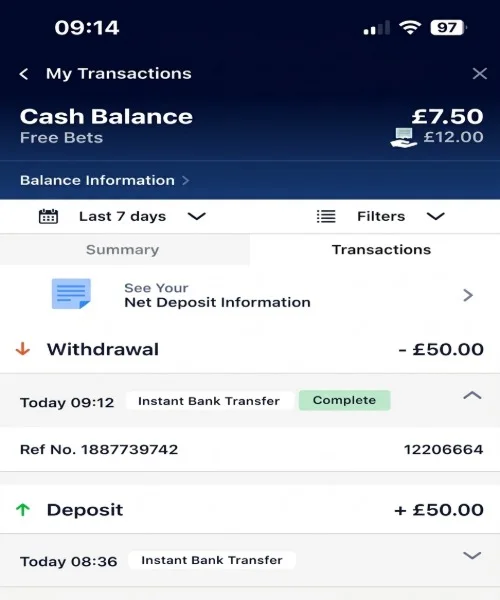
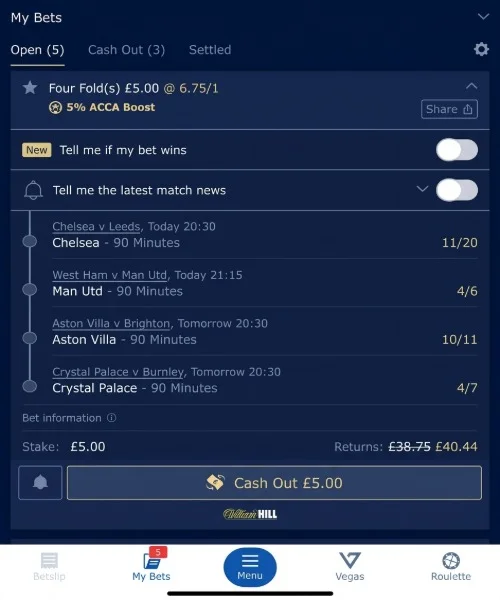
For example, imagine someone receives a password and a screenshot showing an account balance. The screenshot may demonstrate what a screen displayed, but it does not establish who controls recovery options, whether the image is current, or whether transferring the account is permitted.
This distinction helps readers evaluate evidence without relying on reassuring labels.
What “verified” does and does not establish
Verification concerns the customer information supplied to the operator. It is not a transferable certificate of ownership.
A seller may describe an account as previously verified without explaining whose identity was checked. That missing context is central: an account associated with someone else’s information does not become your verified identity when you receive its password.
William Hill’s cited terms also require the funding account or payment card to belong to the named customer. Previous access therefore does not resolve a mismatch between the customer record and another person’s payment details.
Treat the phrase “buy William Hill account with verification” as an advertising claim requiring scrutiny, not proof that an ownership transfer has been approved.
A practical table for checking seller claims
| Seller claim | What the claim leaves unanswered |
|---|---|
| Fully verified | Whose identity was checked? |
| Documents included | Why is another person’s private information being shared? |
| Instant delivery | Does delivery establish anything beyond receipt of credentials? |
| Permanent access | Who controls recovery details and future access? |
| Guaranteed withdrawals | What independent evidence supports that promise? |
| Trusted seller | Can the claimed reputation be independently assessed? |
| Replacement included | Would replacement simply repeat the same ownership problem? |
Use this table to identify missing information, not to select a seller. Attractive descriptions do not remove the underlying account transfer restriction.
A refund promise also has limits as evidence. It describes what a seller says they will do; it does not demonstrate that a refund will be available, that your identity information will remain private, or that the operator accepts the arrangement.
Why screenshots and testimonials are insufficient
People researching “buy William Hill account” may encounter screenshots, positive reviews and claims of previous successful transactions. These materials can influence confidence without answering the ownership question.
A screenshot captures a limited view. It may omit dates, surrounding messages, account details or the events that followed. Even an authentic screenshot cannot establish that another customer will have the same experience.
A testimonial describes an individual account of events. Readers should distinguish independently checkable feedback from anonymous praise or marketing text. Neither proves permission to transfer an account.
Look especially for conclusions that go beyond the evidence presented. “A login worked” and “this arrangement is authorised” are different claims. Treating them as interchangeable creates a misleading impression.
Personal information deserves separate protection
The privacy risk is broader than the purchase price. Identity documents, addresses, banking information and authentication codes can expose information that cannot be recovered simply by requesting a refund.
Do not send banking passwords, email passwords or authentication codes to a seller. Avoid installing remote access software or sharing your screen because someone claims it is necessary to release account details.
Do not upload another person’s identity documents as your own. If documents arrive unexpectedly, avoid forwarding them or publishing them in reviews, disputes or social media posts.
Keep records of relevant transaction communications while limiting unnecessary copies of sensitive information. When reporting a problem, use the recipient’s verified reporting process and provide only the information needed.
If you have already paid or shared information
If you responded to a “buy William Hill account” advertisement, focus first on securing information and documenting what happened.
- Pause further disclosure. Do not send additional documents or codes merely because a seller says another payment or verification step is needed.
- Secure accounts you own. Change reused passwords and review recovery details on your own email and other affected services.
- Preserve relevant evidence. Keep receipts, transaction references, seller messages and the wording of promises made.
- Use verified contact routes. Report suspected account misuse to the operator through independently located support channels.
- Describe events accurately. Separate what you personally observed from what the seller claimed when submitting a report.
These steps do not guarantee recovery of money or access. Their purpose is to reduce further exposure and preserve a clear record.
Related questions about duplicate and false accounts
Account purchases sometimes overlap with questions about opening multiple accounts or providing inaccurate identity details. These are separate issues, and readers should avoid assuming that one explanation covers every platform or situation.
Our guide to duplicate betting accounts and account risks discusses the distinction between account arrangements and the importance of applicable rules.
Our article on fake betting accounts and identity risks provides related reading about inaccurate identity information.
Use these articles for background. The operator’s current agreement remains the primary source for its account requirements.
How to read this guide critically
Start with the scope of each statement. A regional contract explains that agreement; it does not settle every question about other countries. A practical privacy recommendation explains how to limit exposure; it does not predict what happened in a particular transaction.
When comparing articles, favour explanations that clearly identify their sources and acknowledge missing evidence. Be cautious when a page claims certainty about future access or payments without showing a basis for that certainty. Clear limits make information more useful, not less complete.
Frequently asked questions
Can I buy William Hill account access from another person?
The regional terms discussed here prohibit account sales and transfers. Receiving credentials from another person does not change that restriction.
Does changing the password establish ownership?
No. A password change concerns login access. It does not demonstrate that
| William Hill | Buy Verified William Hill Account With (Skrill / Neteller), Buy Verified William Hill Account With Docs |
|---|
Be the first to review “Buy Verified William Hill Account from a Trusted Source”
Related products


Betting Accounts
Buy JustBet Account – Get Your Verified JustBet Account Instantly

Betting Accounts
Buy Verified 1xBet Accounts (Instant Delivery with Full Documents)


Betting Accounts
Buy Verified Stake Account: Bronze, Platinum, Diamond Level IDs

Betting Accounts

Betting Accounts

Betting Accounts

Betting Accounts

Betting Accounts
Reviews
There are no reviews yet.